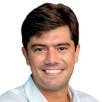
Prof. Georgios N. Belibasakis was recently elected vice-president of the International Association for Dental, Oral, and Craniofacial Research (IADR), marking a significant milestone in a career closely linked to the advancement of oral health science. Professor of clinical oral infection biology at Karolinska Institutet in Stockholm in Sweden, he also serves as head of the Division of Oral Health and Periodontology and head of research at the Department of Dental Medicine. In this interview, Prof. Belibasakis reflects on the personal and professional significance of his election, outlines his priorities for the association, and shares his perspective on the value of collaboration, the importance of capacity building and the evolving role of digital technologies in oral health research.
Prof. Belibasakis, you joined IADR in the late 1990s. What does your election as vice-president represent for you personally, and how do you see this role building on your long-standing involvement with the association?
My election as vice-president of IADR is a great honour that comes with a significant responsibility. IADR has been my scientific home ever since I joined as a dental student. Hence, this role reflects not only a personal recognition but also the trust of the global oral health research community in my leadership and vision.
I am particularly proud to be the second Swedish vice-president and the first of Greek origin in the association’s 105‑year history. This role builds naturally on my extensive involvement with IADR through multiple scientific groups, committees and editorial responsibilities, as well as my involvement across different regional divisions. Building on my decades of active service and collaboration within the organisation, I believe that the broad overview and experience that I have acquired will help me contribute at a more strategic level to shaping the future direction of the field.
Looking ahead, what priorities do you hope to advance for the global oral and craniofacial research community during your term in office?
A central priority during my term is to work towards strengthening IADR as a global platform for impactful science that translates into improved patient care worldwide. I see strong potential in fostering collaboration across geographical regions and scientific disciplines, ensuring that research excellence is not confined to limited settings but shared globally, so that oral health challenges are addressed collectively and sustainably. At the same time, I aim to re-evaluate and promote strategies for encouraging young investigators’ participation in the scientific activities and networks of IADR.
“IADR has been my scientific home ever since I joined as a dental student.”
Interdisciplinary research is becoming increasingly important in oral health science. How do you see the association strengthening collaboration across disciplines?
Interdisciplinary collaboration is essential for addressing the complex biological, genetic, environmental and societal determinants of oral disease. IADR plays a pivotal role by acting as a bridge between dental disciplines and adjacent scientific fields, as well as medicine more broadly. The organisation strives to further support cross‑disciplinary research groups, joint scientific sessions and integrated thematic conferences and to leverage digital platforms to connect researchers across regions. My own experience working at the interface of oral microbiology, immunology and systemic health has shown that meaningful progress often emerges when disciplinary boundaries are deliberately crossed.
Supporting early-career researchers is a recurring theme in your priorities for IADR. What concrete initiatives or changes would you like to see to better engage and empower young investigators worldwide?
Supporting early‑career researchers is fundamental to the long‑term vitality of our field and our organisation. We plan to expand mentoring structures and enable greater accessibility of fellowship and networking opportunities for young investigators within IADR. By actively integrating emerging researchers into the association’s core activities, we can ensure not only their professional development but also the renewal and sustainability of global dental research leadership.
Persistent global inequalities in research capacity remain a major challenge. From your perspective, what practical steps can organisations such as IADR and leading universities take to strengthen dental research in low-resource settings and ensure more equitable participation?
One of the most pressing challenges for global dental research is ensuring equitable access to research resources and opportunities, particularly in low‑resource settings. Organisations such as IADR can make a tangible difference by supporting capacity‑building initiatives, facilitating institutional partnerships, and promoting knowledge sharing through global and digital platforms. Leading universities also have a responsibility to contribute through training exchanges, joint research programmes and mentorship networks that empower local researchers. By investing in people and long‑term collaboration, we can help ensure that research participation becomes genuinely global and that diverse perspectives inform oral health science worldwide.
In recent years, oral and craniofacial research has rapidly integrated digital technologies and artificial intelligence (AI). What role do you foresee IADR playing in promoting both innovation and responsible use of AI in oral health research?
I see IADR playing an important role as a facilitator of innovation and a guardian of scientific responsibility in the adoption of digital technologies and AI. Given the rapid development of molecular diagnostics, digital research infrastructure and big data‑driven approaches, IADR is well positioned to promote best practices, interdisciplinary dialogue and responsible implementation of AI in oral health research. As the number of scientific abstracts that engage with AI approaches in research has increased over the past few years, the need for coordinated guidance and responsible standards has become more pronounced.
Editorial note:
Prof. Georgios N. Belibasakis’s term as vice-president will begin at the conclusion of the 104
th general session of the International Association for Dental, Oral, and Craniofacial Research, to be held from 25 to 28 March in San Diego in the US. More information about the event can be found
here.
Tags:
Periodontitis and peri-implantitis are both inflammatory conditions that affect gingival tissue. However, owing to the anatomical differences between teeth ...
SOLNA, Sweden: The oral cavity represents a complex microenvironment where a diverse microbial community flourishes. A recent review study, carried out by ...
MUNICH, Germany: As the use of artificial intelligence (AI) becomes increasingly established in dentistry, questions have arisen regarding the justification...
YOKOHAMA, Japan: Yokohama has been named the host city of the 2029 edition of the International Association for Dental, Oral, and Craniofacial Research ...
ALEXANDRIA, Va., U.S.: This year marks the centennial of the Journal of Dental Research (JDR), a peer-reviewed medical journal that disseminates new ...
Live webinar
Tuesday, 24. March 2026
18:00 CET (Oslo)
Live webinar
Tuesday, 24. March 2026
19:00 CET (Oslo)
Live webinar
Wednesday, 25. March 2026
17:00 CET (Oslo)
Live webinar
Wednesday, 25. March 2026
17:00 CET (Oslo)
Dr. Jose Carlos Rosas Diaz DDS
Live webinar
Wednesday, 25. March 2026
18:00 CET (Oslo)
Prof. Sérgio André Quaresma
Live webinar
Wednesday, 25. March 2026
20:00 CET (Oslo)
Live webinar
Wednesday, 25. March 2026
22:00 CET (Oslo)



 International / International
 Brazil / Brasil
 Canada / Canada
 Latin America / Latinoamérica
 USA / USA
 Austria / Österreich
 Bosnia and Herzegovina / Босна и Херцеговина
 Bulgaria / България
 Croatia / Hrvatska
 Czech Republic & Slovakia / Česká republika & Slovensko
 France / France
 Germany / Deutschland
 Greece / ΕΛΛΑΔΑ
 Hungary / Hungary
 Italy / Italia
 Netherlands / Nederland
 Poland / Polska
 Portugal / Portugal
 Romania & Moldova / România & Moldova
 Slovenia / Slovenija
 Serbia & Montenegro / Србија и Црна Гора
 Spain / España
 Switzerland / Schweiz
 Turkey / Türkiye
 UK & Ireland / UK & Ireland
 China / 中国
 India / भारत गणराज्य
 Pakistan / Pākistān
 Vietnam / Việt Nam
 ASEAN / ASEAN
 Israel / מְדִינַת יִשְׂרָאֵל
 Algeria, Morocco & Tunisia / الجزائر والمغرب وتونس
 Middle East / Middle East

 Dr. Andrea BazzucchiLive webinar
 Prof. Sérgio André QuaresmaRegister now1CELive webinar
 Dr. John Flucke DDSRegister now1CELive webinar
 Dr. João Abreu













To post a reply please login or register